Stages of preparing for a funeral ceremony
The first step after the passing of a loved one is for a doctor to confirm the death. The doctor issues a death certificate — a document necessary to begin the formal preparations for the funeral. With the death certificate, you must go to the Civil Registry Office, where the official death record is issued. It is advisable to request several copies at once, as they will be needed for administrative, banking, and insurance matters.
Once the death certificate has been issued, you may begin discussions with the funeral home of your choice. In such a difficult time, it is helpful to prepare a simple checklist. It will make it easier to organize all the essential tasks.
In the next steps, decisions will need to be made regarding the type of burial (traditional, cremation, or ecological) and the nature of the ceremony (religious or secular), as well as the date of the funeral and the place of burial. These decisions are made in consultation with the cemetery administration and the funeral home to ensure that the entire process runs smoothly and without unnecessary stress.
If death occurs abroad, the process of arranging the funeral is similar, but some formalities take place simultaneously in the country where the death occurred and in Poland. More documents and permits are required (you can read more about this in our funeral guide). In such a situation, it is advisable to entrust the matter to a company specializing in the international transportation of the deceased, which will take over contact with authorities and consulates on behalf of the family.
Choosing a funeral home – what to pay attention to?
When selecting a funeral home, it is worth considering:
- experience in providing services (especially if international repatriation is required);
- scope of services (formalities, body preparation, transportation, ceremonial arrangements);
- a clear and detailed cost estimate;
- availability and empathy of the staff.
A funeral home that provides comprehensive support — from formalities to the organization of the ceremony — significantly relieves the family and allows them to focus on saying goodbye and processing their grief.
Scope of services and course of funeral arrangements
Comprehensive funeral services cover every stage: the collection of the deceased, preparation of the body for burial (thanatocosmetics, embalming, dressing), completion of administrative and cemetery formalities, as well as coordination of the funeral ceremony itself. One company oversees scheduling, communicates with the clergy or funeral celebrant and the cemetery administration, and arranges the musical, floral, and technical aspects of the ceremony.
Which elements are essential when arranging a funeral?
Preparing for a funeral ceremony requires calmly organizing many matters — both formal and logistical. At the outset, it is advisable to gather the necessary documents: the medical and civil death certificates, the ID of the deceased, and any authorizations for the funeral home as well as documents confirming family relationship. In some cases, a will or the written wishes of the deceased may also be required.
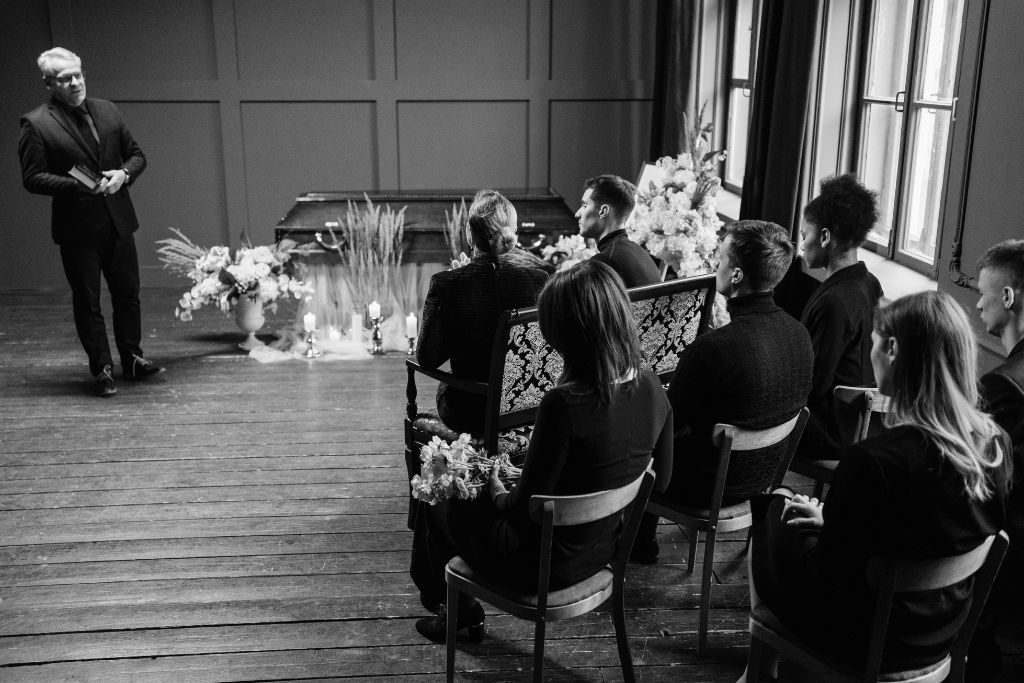
The next step is choosing the type of ceremony — religious or secular. This is an important decision, as it shapes the character of the entire farewell. It is worth thinking through the details: who will deliver the eulogy, what music will best reflect the mood of the farewell, and whether symbolic elements recalling the life and passions of the deceased will be included — such as photographs, mementos, or personal belongings.
A well-chosen ceremonial setting gives the funeral its individual character. Flowers, graveside arrangements, proper sound systems, elegant transportation for attendees, or subtle lighting — all of these elements help create an atmosphere of dignity and respect. A professional funeral home can advise how to choose such details so that the ceremony aligns with the wishes of the family and reflects the personality of the deceased.
Logistical matters are also worth considering: arranging parking for guests, ensuring accessibility for elderly individuals or those with disabilities, and after the ceremony, considering a wake or intimate gathering. Well-organized preparations for the funeral ceremony help avoid unnecessary stress on the day of the service and allow the moment of farewell to remain in memory as a warm and respectful experience.
Funeral of a person who passed away abroad – what does the procedure look like?
Bringing the deceased back to the country requires additional steps: obtaining a death certificate from the place of death, a consular certificate authorizing the transport of the body or remains, as well as permits from the Polish authorities (for example, authorization from the county office, depending on the place of burial). International transport is carried out by specialized funeral companies; procedures and required documents differ depending on the country in which the death occurred and whether the body or cremated remains are being transported. For this reason, when a death occurs abroad, it is advisable to rely on a funeral company that has experience in international repatriation — this reduces the risk of delays and administrative complications.
If you need assistance with funeral arrangements and the repatriation of the deceased from abroad, the specialists at BONGO have the experience and international network required to streamline the entire process and allow you to focus on what truly matters — a dignified farewell.
A well-organized funeral — even when complex international procedures are involved — gives the family the space to grieve peacefully and to say goodbye with dignity.
 +48 22 831 00 36
  biuro@bongo.com.pl